National Nanotechnology Initiative (NNI) Research and Development (R&D) User Facilities
NNI Shared Infrastructure
Nanotechnology R&D is facilitated by a network of shared infrastructure programs that are funded by several federal agencies and make research capabilities available to the broader community of researchers from academia, government, and industry.
The resources are central to the NNI and are generally available to the research community. Access rules, costs, and provisions are determined by individual facilities and their funding agencies. For assistance, contact researchers directly or the National Nanotechnology Coordination Office at info@nnco.nano.gov.
Participating Agencies and User Facilities
Department of Energy (DOE)
-
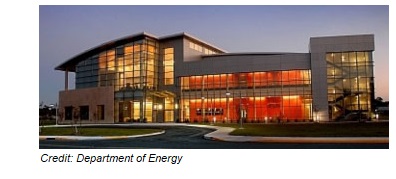 Nanoscale Science Research Centers (NSRCs): The NSRCs are five user centers that form the foundation of a national program dedicated to interdisciplinary nanoscale research, which incorporates pioneering science, advanced tools, and state-of-the-art computing capabilities. Each NSRC is located at a DOE National Laboratory, providing users with access to other facilities and opportunities for collaboration.
- Center for Nanoscale Materials(CNM), Argonne National Laboratory, Lemont, IL
- Center for Functional Nanomaterials(CFN), Brookhaven National Laboratory, Upton, NY
- Molecular Foundry, Lawrence Berkeley National Laboratory, Berkeley, CA
- Center for Nanophase Materials Sciences(CNMS), Oak Ridge National Laboratory, Oak Ridge, TN
- Center for Integrated Nanotechnologies(CINT), Sandia National Laboratories and Los Alamos National Laboratory, Albuquerque/Los Alamos, NM
- National Laboratories: As a vital component of the nation’s extensive federal research network, the National Laboratories equip the country with critical scientific and technological abilities.
National Institute of Standards and Technology (NIST)
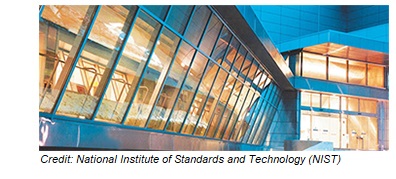 Center for Nanoscale Science and Technology (CNST): The CNST supports the U.S. nanotechnology enterprise from discovery to production by providing industry, academia, NIST, and other government agencies with access to world-class nanoscale measurement and fabrication methods and technology. The CNST’s shared-use NanoFab gives researchers economical access to and training on a commercial state-of-the-art tool set required for cutting-edge nanotechnology development. The simple application process is designed to get user-funded projects started in a few weeks. Looking beyond the current commercial state of the art, the CNST’s NanoLab offers opportunities for researchers to collaborate on creating and using the next generation of nanoscale measurement instruments and methods.
National Institutes of Health (NIH)
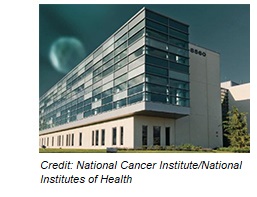 Nanotechnology Characterization Laboratory (NCL): The NCL serves as a resource for nanotech researchers seeking regulatory review of nanotechnologies intended as cancer therapies and diagnostics.
- National Cancer Institute (NCI) Alliance for Nanotechnology in Cancer: The NCI Alliance for Nanotechnology in Cancer fosters innovation and collaboration among researchers to leverage nanotechnology for advancing cancer research, treatment and diagnosis.
National Science Foundation (NSF)
- National Nanotechnology Coordinated Infrastructure (NNCI): The NNCI has 16 facilities that are operated by a consortium of universities. With a geographically diverse distribution of facilities, the NNCI provides fee-based access at reduced rates to tools and expertise for students, academics, entrepreneurs, and industry professionals around the globe.
- Materials Research Science and Engineering Centers (MRSECs): These university-led research centers focus on materials science and engineering problems.
- Industry–University Cooperative Research Centers (IUCRCs): These centers engage in research across all technology and market sectors.
- Materials Innovation Platforms (MIPs): These platforms accelerate advances in materials research.
- Engineering Research Centers (ERCs): Interdisciplinary centers located across U.S. universities that pursue strategic advances in complex engineered systems and systems-level disruptive technologies.
- Centers for Chemical Innovation (CCIs): The CCIs are research hubs that address significant, foundational challenges in chemistry, such as developing methods for the controlled synthesis of nanomaterials.
Environmental Protection Agency with the National Science Foundation
- Center for the Environmental Implications of Nanotechnology (CEINT): The CEINT examines how a wide variety of nanomaterials—whether naturally occurring, manufactured, or created as byproducts of human activity—interact with ecosystems by studying their environmental exposure, biological consequences, and ecological footprint.
NSF Quantum Foundries (Q-AMASE-i Program)
- UCSB NSF Quantum Foundry: A next generation materials foundry that develops materials and interfaces hosting the coherent quantum states needed to power the coming age of quantum-based electronics.
- MonArk Quantum Foundry: The overarching mission to accelerate two-dimensional materials research for quantum technologies in the US.
National Institute for Occupational Safety and Health
- Nanotechnology Research Center: The Nanotechnology Research Center investigates the workplace safety and health aspects of advanced materials and nanotechnology, while also offering guidance on their potential risks and practical applications.
US Department of Agriculture’s Forest Service
- Process Development Center: As a distinctive, open-access facility, the PDC provides a collaborative environment where researchers, entrepreneurs, and industry leaders can pioneer novel products and production processes.
- Forest Service Forest Products Laboratory: The Forest Products Laboratory spearheads the nation’s research into wood science while also pioneering the development of novel wood-based products.
U.S. Navy
- Institute for Nanoscience: At the Institute for Nanoscience, groundbreaking research emerges from the convergence of materials science, electronics, and biology, all explored at the nanometer scale.
Army, Navy and Other U.S. Government Agencies
- Institute for Soldier Nanotechnologies (ISN): The ISN is a collaborative effort that works to develop and deploy technologies aimed at substantially boosting the protection, survival rates, and operational effectiveness of the Warfighter and Warfighter-supporting systems.